Easy As Pie

We’ve all heard the phrase “easy as pie,” but anyone who has actually attempted a homemade pie crust knows that it’s… well… not always so easy. Pie dough can be fussy, unpredictable, and a little intimidating—until you learn the tricks. When I was home for Thanksgiving, I had yet another pie-making refresher from the best baker I know: my mom. She has been making this exact pie crust for as long as I can remember, and every holiday, it turns out perfectly flaky, buttery, and beautiful.
What I love about this recipe is that it’s not overly sweet. Many store-bought crusts lean sugary, but this one is mild and balanced, which lets the filling shine—whether it’s a sweet apple crumble or a savory quiche. It truly is an all-purpose dough that works all year long.
The two biggest secrets? Cold and fast. Keep everything cold, work quickly, and don’t overthink it. My mom always reminds me that people have been making pie long before food processors and specialty tools existed, so don’t stress if you don’t have the “right” equipment. A pastry cutter works great; two knives will also do the job. And if all else fails, your hands can get it done—just move quickly so the butter stays cold.
This recipe yields two 9-inch rounds, which is ideal because you can make a double-crust pie or use the second round for something creative, like my favorite Pie Crust Pinwheels. Once you get the hang of this dough, it becomes second nature, and it truly elevates every pie you make.
Homemade pie crust may not be the easiest thing ever, but it’s absolutely worth it—and with this recipe, a little practice, and a few tips from mom, it becomes something you can master with confidence. Happy baking!
Pie Dough
Ingredients
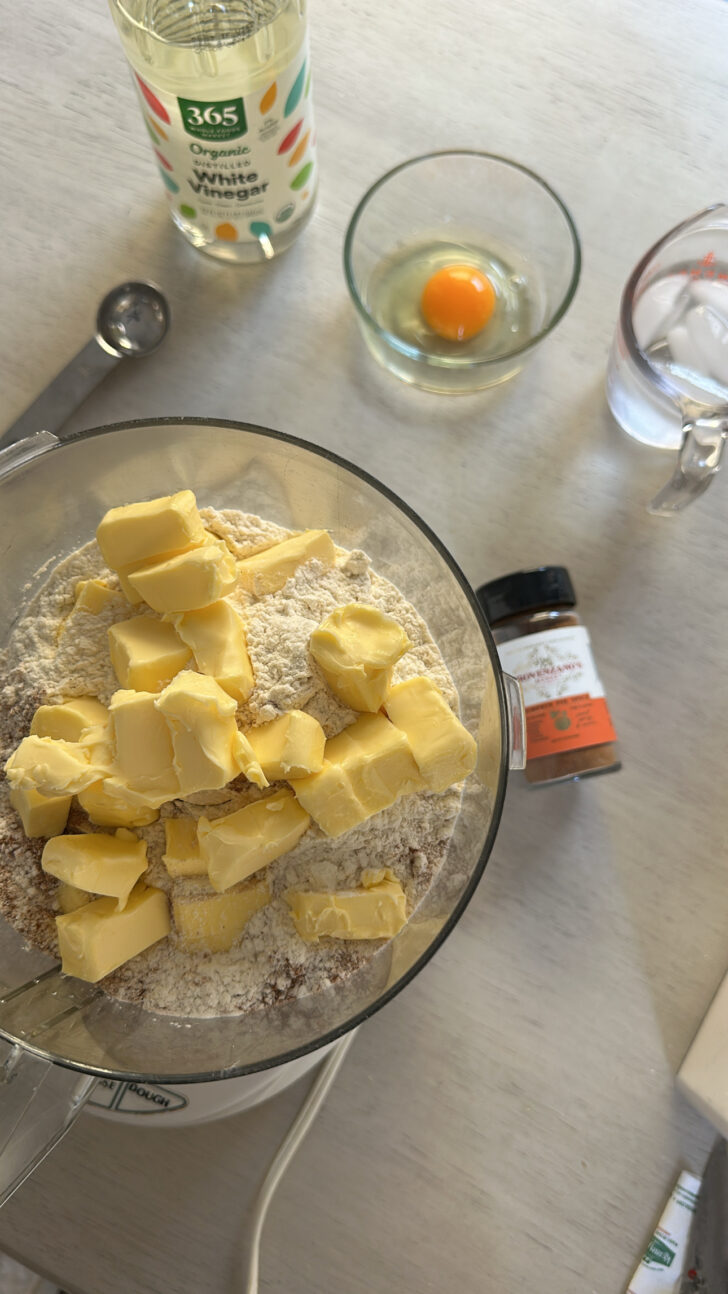
- 3 cups flour
- 1 cup cold unsalted butter, cut into small cubes
- 1 tablespoon white vinegar
- 1 cold egg
- 4 tablespoons cold water
Instructions
- Add the flour to a food processor. If you don’t have one, use a pastry cutter; if not, two knives; and if all else fails, your hands will work just fine. Bakers have been making pie crust long before gadgets existed—so don’t stress.
- Add the cold butter cubes to the flour. Pulse or cut the butter in until the mixture looks crumbly with pea-sized bits of butter throughout. If you’re using your hands, work quickly to keep the butter cold.
- In a small bowl, whisk together the vinegar, egg, and cold water. With the food processor running, pour the mixture into the flour. Stop processing as soon as the dough comes together into a ball.
- Turn the dough out onto a lightly floured surface. Divide it into two equal portions and gently press each into a flat disk. Place each disk in a plastic bag and refrigerate for at least 30 minutes so the dough can rest and chill.
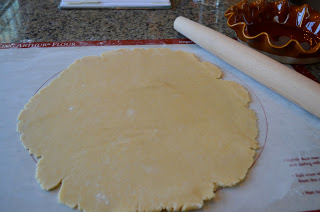
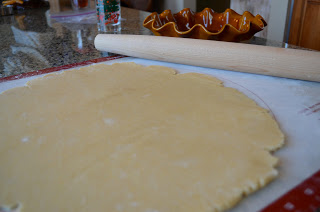
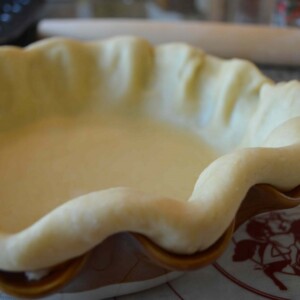
- When ready to roll, place one disk on a floured surface and roll it to about ¼-inch thick. Lightly flour your rolling pin and wrap the dough around it to help transfer it into your pie dish. Unroll it over the dish and gently ease it into place without stretching. Fold the overhang under and crimp the edges—use your fingers for a classic ripple or get creative with your design.
- Before baking, chill the shaped crust for at least 15 minutes.
- For blind baking, use a fork to prick a handful of dots into the pie dough, then line the crust with foil or parchment and fill with pie weights or dried beans. Bake at 375°F for 7 minutes, remove the weights and lining, and bake for another 7 minutes or until lightly golden. Blind baking helps prevent a soggy crust, though not all recipes require it.
Photos are from my original post in November 2012: